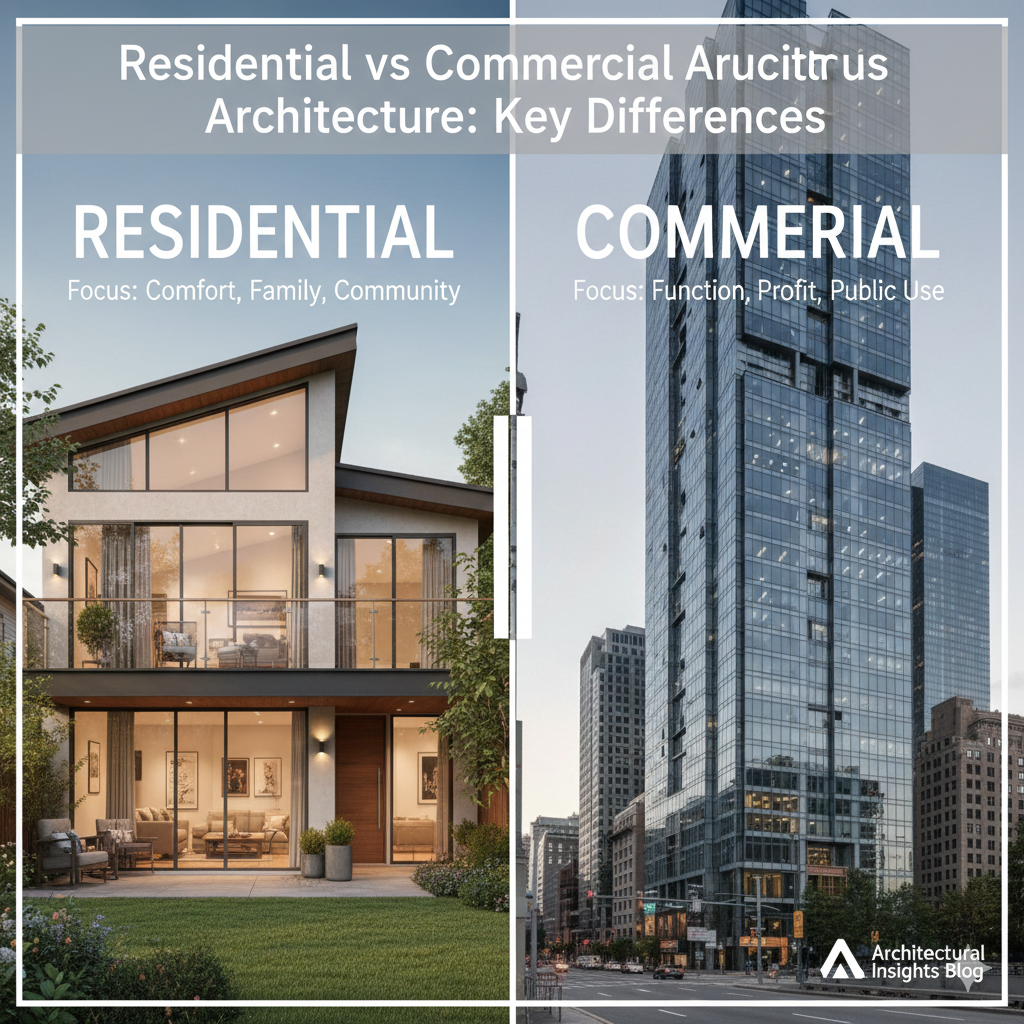
Understanding the difference between residential and commercial architecture is essential before starting any building project. While both disciplines fall under architectural design, they vary significantly in scale, regulations, functionality, and planning approach. Choosing the wrong architectural strategy can lead to inefficiencies, higher costs, and compliance issues. This is why early architectural planning services play a critical role in aligning project goals with the right design framework. Whether you are building a private home or a large commercial facility, knowing how residential and commercial architecture differ will help you make informed decisions and select the right professional support.
What Is Residential Architecture?
Residential architecture focuses on designing spaces where people live. This includes single-family homes, duplexes, townhouses, apartments, and private villas. The primary goal of residential architecture is to enhance comfort, privacy, functionality, and aesthetics while reflecting the lifestyle and personal preferences of the occupants.
Planning for residential projects often involves close collaboration between the architect and homeowner. Site orientation, natural light, ventilation, room layout, and material selection are carefully considered to create a livable and welcoming environment. Zoning laws, neighborhood context, and local residential building codes in the USA also strongly influence the design process.
Professional Residential Architectural Planning Services help homeowners translate their vision into practical designs while ensuring compliance with regulations and long-term usability. These services ensure that residential spaces are not only visually appealing but also efficient, safe, and adaptable to future needs.
What Is Commercial Architecture?
Commercial architecture deals with buildings used for business, public, or institutional purposes. These include office buildings, retail centers, restaurants, hotels, healthcare facilities, warehouses, and mixed-use developments. Unlike residential projects, commercial architecture prioritizes functionality, operational efficiency, safety, and brand representation.
Commercial buildings must accommodate higher occupancy levels, complex mechanical systems, and strict safety standards. Planning considerations often include accessibility requirements, fire and life safety codes, structural load capacity, and long-term maintenance needs. In the USA, commercial projects must also comply with ADA guidelines and local zoning ordinances.
Engaging professional commercial architectural planning services ensures that commercial developments are designed to support business operations while meeting regulatory requirements. These services help manage complexity, reduce risk, and create spaces that enhance productivity and customer experience.
Key Differences Between Residential and Commercial Architecture
Scale and Complexity
One of the most noticeable differences between residential and commercial architecture is scale. Residential projects are typically smaller and involve fewer stakeholders, making decision-making more straightforward. Commercial projects, on the other hand, often span larger sites and require coordination among developers, investors, engineers, contractors, and regulatory authorities.
Regulations and Building Codes
Residential buildings are governed by local residential codes focused on safety, habitability, and neighborhood compatibility. Commercial buildings face stricter regulations related to occupancy limits, fire protection, accessibility, and structural performance. These regulatory differences significantly influence the architectural planning process.
Design Priorities
Residential architecture emphasizes comfort, personalization, and emotional connection to space. Commercial architecture prioritizes efficiency, durability, and operational flow. While aesthetics matter in both, commercial designs often reflect branding and corporate identity rather than individual taste.
Differences in the Architectural Planning Process
The architectural planning process varies considerably between residential and commercial projects. Residential planning is often client-driven, with architects tailoring designs to individual lifestyles, family needs, and personal preferences. Site context, privacy, and daily routines are central considerations.
In contrast, commercial planning is strategy-driven. Architects must consider circulation flow, employee productivity, customer experience, and future scalability. This is where commercial-architectural-planning-services become essential, as they help align design decisions with business objectives and regulatory constraints.
By comparison, Residential Architectural Planning Services focus on creating harmonious living environments while maximizing site potential. Both approaches require expert planning, but the priorities and outcomes differ significantly.
Budget, Timeline, and Project Management Differences
Residential projects generally have smaller budgets and shorter timelines. The planning and approval process is often simpler, allowing projects to move from design to construction more quickly. However, budget control is still critical to avoid unexpected costs.
Commercial projects typically involve larger budgets, longer timelines, and phased construction. Approval processes can be complex, requiring coordination with multiple authorities. Architects play a key role in managing costs, schedules, and documentation to keep projects on track. Effective planning reduces delays and ensures that construction aligns with design intent.
Sustainability and Technology in Residential vs Commercial Architecture
Sustainability is important in both residential and commercial architecture, but the approach differs. Residential sustainability focuses on energy efficiency, thermal comfort, natural lighting, and eco-friendly materials. Homeowners often seek long-term savings and environmental responsibility.
Commercial sustainability emphasizes large-scale energy efficiency, system optimization, and regulatory compliance. Green certifications, advanced building systems, and sustainable site planning are common priorities. In both cases, integrating sustainability during the planning stage leads to better performance and lower operational costs.
Which Type of Architectural Planning Services Do You Need?
Choosing the right architectural planning service depends entirely on your project type. Homeowners planning a new residence or renovation will benefit most from Residential Architectural Planning Services, which prioritize lifestyle, comfort, and personalization.
Developers, investors, and business owners should engage commercial architectural planning services to address operational needs, regulatory compliance, and long-term scalability. Selecting the appropriate service ensures that the design process supports your goals and avoids costly mistakes later.
Conclusion: Choosing the Right Architecture Approach
Residential and commercial architecture may share design principles, but their differences are significant and impactful. From scale and regulations to planning priorities and execution, each requires a specialized approach. Understanding these key differences helps clients choose the right architectural planning services for their project. Whether designing a home or a commercial facility, working with experienced architects ensures that your project is functional, compliant, and built for long-term success.
